The perils and possibilities of grassroots politics

1487524570509I decided to run for supervisor because there was no one challenging Aaron Peskin, the incumbent. He has turned his back on the residents who elected him.  He didn’t bother to respond to my email concerning issues impacting our neighborhood.

Furthermore, he had tried to open a “Navigation Center” (a homeless shelter with lax rules) on Broadway without consulting the neighbors. At this point, I  felt compelled to step up.

For years I have written letters, have spoken up at meetings and  have tried to work within the system to resolve concerns of our District. I received very little result from my efforts. Perhaps as a candidate for Supervisor, our concerns and potential solutions would see the light of day.

The barrier to entry was relatively light, $500 and 20 valid signatures. While I could think of more pleasant ways to spend my time and money, but the immediate concerns could no longer be ignored.

I had never run for any office and I was venturing outside of my comfort zone. It is not my nature to pester people, so it was awkward just asking neighbors for signatures. At least I would not be asking anyone for money. While my opponent spent nearly a million dollars for his one year term, I planned to fund my own campaign and spend under $2,000. While I can’t even come close to buying even one junk mailer for that amount, they seem to go straight into the bin anyway. I felt that the message was more important than the medium.

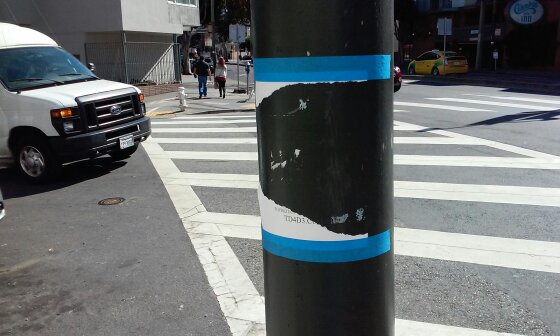
To get the most bang for the buck, I thought I could post notices on street poles and get a bit of exercise in the process. I hadn’t counted on them being torn down as fast as I could put them up. Well, I guess that means more printing and more exercise. I asked neighborhood businesses whose proprietors endorsed me personally, but were leery of displaying my posters for fear of retribution. I shared their fears and quit asking.

I had hoped for even-handed treatment from the media.  Wrong. The first indication that there would be trouble came soon after I filed: The Chronicle ran a list of the candidates for supervisor for each district, but I wasn’t even mentioned.  Although there was someone listed who wasn’t running. My attempts to get errors corrected were futile.

The Chronicle again thwarted my campaign when an interviewer misquoted  and reversed what I had said. She also stated that I did not like tourists or new residents because they “destroy the magic”. I had not mentioned anything about tourists, new residents or magic. Again my attempts at corrections were ignored.

I found new hope when the League of Women Voters  invited me to debate Aaron Peskin, but they cancelled when they couldn’t get Peskin to show up.

I was excited to receive an invite, in my personal email, to a “meet the candidates” event, sponsored by the Friends of the Urban Forest. Unfortunately there was no invitation AS A CANDIDATE.  When I requested to be included as a candidate, they refused. They said they would not include me as a speaker because I hadn’t amassed $5,000 in donations. Perhaps the real reason was because I had fought to save the trees on Van Ness Avenue which they had sanctioned for clear cutting.

Fortunately the internet has opened  new avenues for unfiltered communication. No longer is it necessary to spend obscene amounts of money to reach savvy voters. It has allowed me to embark on this campaign without taking neighbors’ hard earned dollars or getting in bed with big donors.

We have a chance say no to the political machine that has run us into a ditch. Let’s change course while we have this opportunity. We need to take a chance, to have a chance.
 

Who’s looking out for you?

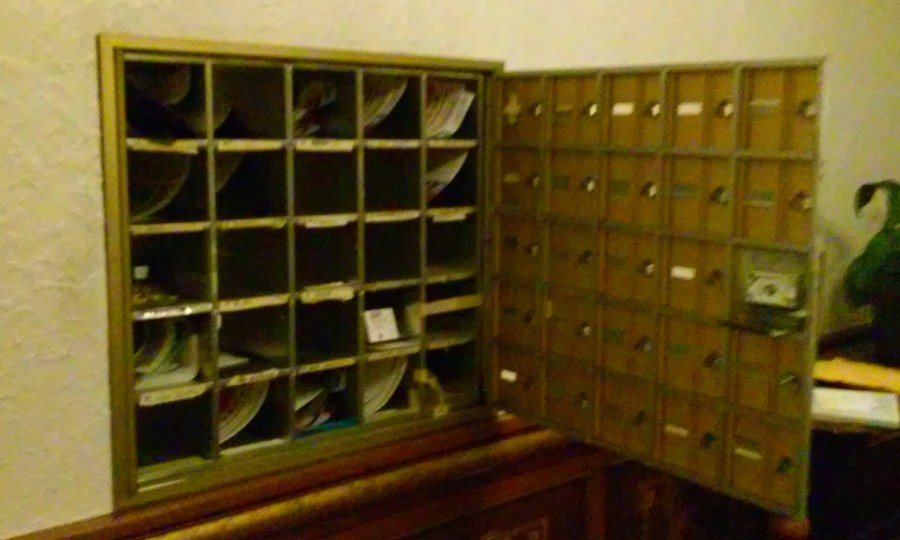
A couple months ago, a tenant told me a disturbing piece of news. Someone had got hold of the mail key that gives our carrier access to our lobby and the mailboxes. Evidently they had been using it to steal mail throughout the district. I was appalled that the Postal Service had not informed everyone concerned, and immediately changed the compromised locks. I spent hours on the phone trying to get action from the Post Office, but got nowhere. I asked the tenant to call our district supervisor to get his help resolving this problem. She was told by Aaron Peskin’s office to keep  calling the Post Office. I had to bypass the Postal access as a temporary measure to ensure our safety. I’m still waiting for a lasting solution.

When I asked our supervisor last week about the situation, he said his staff was working on it. I hope that inquiry and/or this posting prompts him to prioritize the problem.

The idea that a key is floating around which gives access to the mail of everyone in our area and entry to many, if not most of their buildings, is very troubling. The fact that our supervisor does not make it a priority is unacceptable. Here was a great opportunity for him to be a hero by making the right phone calls and getting the action necessary to insure everybody’s safety. As of this writing, the situation has not changed.

We need a supervisor who is focused on the issues concerning our district’s issues first.  I wouldn’t be able to sleep at night if I hadn’t done all I can to tackle problems like the stolen key. I hope that this serious situation gets resolves immediately.

What have our schools learned?

Sherman SchoolMy next door neighbor was excited to go to school. She was 5 years old, quite bright for her age, and anxious to learn more. Her parents were very proud of her and also looking forward to her starting kindergarten at the lovely Sherman school a block away… But no: the School Board, in their infinite wisdom, decided that she must go to school in the Tenderloin. Aside from the inconvenience of getting her there and picking her up while not owning a car, they did not like the idea of leaving her all day in a distant, neighborhood. So they decided to bear the high financial burden of enrolling their girl in St. Bridgid School.


San Francisco has one of the lowest per-capita population of children in this Country. My neighbor’s experience is a good reason why. Busing was banned some time ago, so our educrats’ answer is to make parents provide the transportation!  Apparently they do not understand the intent of that law. Using children as pawns in their social experiments is wrong, and running off families is a shame. This was a magical place to grow up in.

Our schools should also offer engaging after-school programs to nurture the hidden talents our children have and to afford relief to working parents.

An alarming number of students do not graduate, and of those who do, only half go on to college. Unfortunately those students who are not college-bound have learned no skills which they can translate into well-paying careers. The school district closed the vocational training schools some time ago, because those courses might “stigmatize the students”. Well, every plumber, electrician or mechanic I know is too busy making money to worry about being “stigmatized”.

The School District’s mission  to promote “social justice” should not take priority over teaching reading and writing. I believe its mission should be to train students to learn  to the best of their ability, the skills they will need to succeed in life.

I also believe the schools should include a mandatory class in “survival skills”: To teach each student what to do in emergencies, how to avoid getting into trouble or worse not living long enough to make it to adulthood. If my younger brother had taken such a class, perhaps he would have seen his seventeenth birthday. Even the best education is meaningless if you don’t survive to use it.

Finally, we have a problem of attracting and retaining good teachers, who are the backbone of our schools. The primary reason is affordability in San Francisco. Why not give teachers some priority on the list for affordable housing, that developers are required to provide. Who wouldn’t want teachers as well as our first-responders living in their building?  Seems like a no-brainer to me.

Where does all the money go?

Last summer I was showing a friend the area where I grew up, including the two City Parks that I frequented. I was saddened and embarrassed to see neither had seen a coat of paint since I was a kid, and one had been closed for some time. Didn’t we pass a bond measure awhile back to fix up the parks? Where did the money go?

The City and County of San Francisco spends 5 times as much per resident as Santa Clara County. We have twice as many employees, despite being 1/20th the size and having half as many residents. Why couldn’t some of those employees fix up my childhood parks? The City employs hundreds of Public Relations Specialists, (Spin Doctors), and just a handful of Certified Arborists. I believe they have it backwards.

On a recent visit to a local coffee shop I witnessed a City crew filling a pothole, about a foot round, and counted six worker involved in the process. I wondered how they all fit in the truck, and then noticed a second truck across the street.I have seen similar scenes time and time again, and can only deduce this is how things are done. There is no mystery why we spend so much and get so little if this is how they roll. Some City departments  have a culture of laziness and ineptitude. They somehow can’t even do the basic maintenance despite having twice as many workers as the average, and have to borrow money to hire sub-contractors to do their work.

We need to change the culture of civil service to where they take pride in the work they do and the City they serve. We should not have to mortgage our future to maintain our parks.

Who’s enforcing the law?

A few months back, I was awakened around 4 in the morning and noticed a car entering the parking lot across the street. This lot has had a number of break-ins, so seeing the occupants of that car start peering into the other cars, I called the police. I was told that a patrol car would be dispatched. Several minutes later a car alarm went off, confirming my suspicions about the activities. I called the police back to update them and was told that a unit had already arrived at the scene. I replied that I was looking straight at the scene and there were no police. Just then I noticed a police car coming up the street. Great, a perfect opportunity to catch these thieves in the act and reduce the rash of car break-ins that have been plaguing our neighborhood! The police car just drove right by. 😦   Three cars were broken into, and the culprits got away with it. I have heard similar stories from neighbors, and have encountered more “no-shows” since.

My father was a policeman in San Francisco, and back then, they all had to live in the City. It seemed that they really cared about fighting crime and making the City safe. After all, they lived here too. I’ve heard several police officers say the City is not safe for their families. What about us?

Our police department has been in hot water recently for being too aggressive. At the same time, crime is more prevalent and arrests are way down. This makes no sense.

Perhaps we need a police force that has a vested interest in the community they protect. If (or perhaps when) we have a large earthquake, we will likely be without the vast majority of our first responders. This will make a bad situation much worse. We have a compelling interest having our emergency personnel live here. We need to find ways to make that happen. Perhaps we can give our public safety personnel  (and teachers) priority in affordable housing developments.

I would also recommend having police cadets acting as “ambassadors”in our business districts. This would be beneficial in several ways:   It would afford a layer of crime prevention by having a visible law enforcement presence, with a direct line for police response. Also,it would free up our sworn officers to enforce the law and arrest criminals, instead of spending their time acting as deterrents. Most importantly, it would generate a relationship between the police recruits and our communities.

The residents and visitors in San Francisco need to be safe and their property protected. Sadly that has not been the case lately. We must turn that around.


Whether you like it or not!

The other night I went to a hearing at City Hall to try to talk sense into the “powers that be”, to stop the ill conceived Van Ness Bus Rapid Transit. We had some 50 or so concerned neighbors who were willing to interrupt their lives and give testimony before the Board of Appeals, to convince them not to allow the City to cut down the trees, tear up the street for years and permanently remove over a hundred parking spaces and a third of the traffic lanes.

After an hour of formalities and items ahead of ours were debated, it was our turn to step up to the plate. But, no, the Commission switched the order of agenda items and put us last. We had to sit for another five and a half hours before our issue would be taken up. I guess that’s how things work at City Hall. Over the past year over a dozen parking places have been taken away for various reasons and not once was there a notice of any hearing. The fact that we were allowed to speak, even if it meant waiting to well past midnight, was a privilege I guess.

As you might imagine most of those came out didn’t stay to testify. With families at home and work the next morning the majority had to leave, still twenty or so determined citizens stuck it out to the end. Despite their pleas for reason versus only a few cheerleaders for the project, the fix was in. The City will now spend over 300 million of your dollars to destroy an important artery and wreck havoc upon a community for years to come.

The residents and businesses deserve to have a say in any proposed changes to their neighborhood. We had dozens of meetings regarding the proposed changes to Van Ness, and each time the residents explained why it wasn’t a good idea and offered asked that low cost alternatives be tried first. They were continually ignored.

It looks like this boondoggle is going to happen, and when it fails, and the residents, businesses and commuters suffer, and the people who shoved it down our throats will face no consequences.

We need more accountability at City Hall and concern for those who’s lives are most affected by the ill-conceived plans.

Let me out of this car!

I recently invited some friends over for a barbecue and one couple was quite late. As they were usually punctual I was beginning to get worried when they sent me a text saying they were sorry but couldn’t find parking, the kids were starting to melt-down and they decided to head back home. I felt terrible that they went through that hassle and disappointed that they couldn’t make the party.

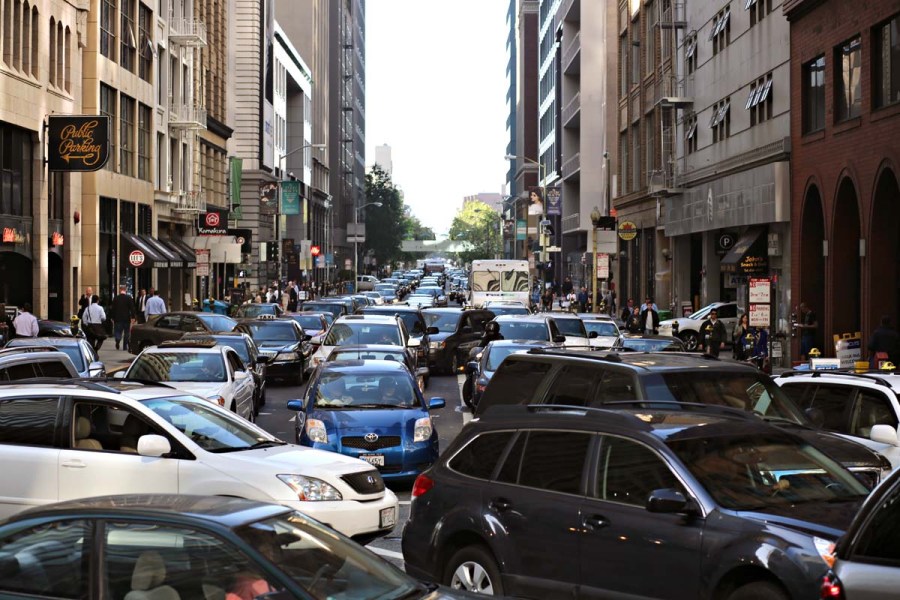
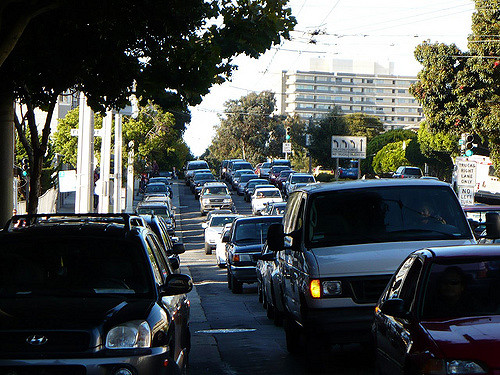
Anyone in district 3 who owns a car, but doesn’t have a garage, knows this is not unusual. People who live elsewhere think it is ridiculous what we put up with, and it’s about to get much worse. The San Francisco Metropolitan Transportation  Agency has plans to remove hundreds more parking spaces in the near future.

I recently met with the City’s Chief Engineer for Livable Streets, to try to convince him that the proposed “bulb-outs” were dangerous, and asked him “why there are so many apartment buildings without garages”. He responded that they didn’t have many cars when they were built. Wrong. Even a hundred years ago, they had sense to build garages every block or two, each which would hold 40 or 50 cars. Perhaps cars then were not as safe, and storing lots of gasoline under bedrooms, was not considered ideal.

Over the years, nearly all of these garages were converted or torn down, causing drivers to rely more on street parking. For several years now the SFMTA has been systematically removing parking spaces. They rationalize that fewer spaces equates to fewer cars. Ironically they also say that 30 per cent of the traffic, are drivers looking for parking. One would think that removing parking would therefore add to the increasing traffic, but logic seems to elude the SFMTA. There are more cars and traffic than ever, despite the MTA’s  social engineering. Most of our families have been driven away and the lack of parking is the number one complaint I hear. My opponent spearheaded the change in our parking requirements for new developments. Instead of a MINIMUM of 1 space per unit, we now have a MAXIMUM of 3 spaces for every 4 units. This undoubtedly adds pressure on our street parking. We are about to lose hundreds of parking spaces along the Polk St. and Van Ness Ave. corridor, with no mitigation planned. This will hurt residents, businesses and visitors. Even if you don’t drive, the congestion will have a negative effect on your quality of life.

I recommend the construction of more off-street parking, near our business corridors which will help businesses, residents and visitors. They will also generate revenue for the City, as all parking structures do. They will also allow the SFMTA to accommodate handicapped, delivery, pick-up and drop-offs at the curb. They would also allow more bike lanes where appropriate.

Another important piece of the puzzle is for the City to create parking where visitors enter, such as Mission Bay. By allowing visitor to park their cars immediately upon arrival and taking public transportation, walk or bike to their destination will alleviate much of our traffic, and allow visitors an alternative to the challenging city driving and parking.

Forcing trucks to double-park and shoppers and residents to keep circling the block, is not good for anyone and The SFMTA is making matters worse.

What to do about the Homeless?

Reasonable people will differ on the answer, but most will agree that the situation has gotten worse; and the solutions tried by City Hall have failed. Just recently they have joined forces to double down on their programs. Whether those programs are successes or failures depends on your point of view. If you believe creating permanent supportive housing is the measure of success, the City has triumphed. I don’t believe that we can or should try to provide a free apartment for life, to everyone who pitches a tent on our sidewalk. City Hall, and my opponent believe the solution is to provide the free housing. Aaron Peskin has vowed to open a “Navigation Center” in our district, and nearly did just that without any community outreach, but the building was sold at the last minute, preventing the implementation. A “Navigation Center” is a shelter where the homeless can bring all their stuff, and come and go as they please. I don’t think its a good fit for our neighborhood, and certainly should have the consent of the neighbors if considered.

So what is my solution to this overwhelming problem? Let me lay out my strategy:

First we should do what we can to prevent our residents from becoming homeless. Preventing evictions and providing relief to those who suffer setbacks should be our first line of defense.

For our residents who suffer a setback which causes them to become homeless, and are actively trying to get on their feet, we should provide temporary housing that is safe, clean and convenient to work or job training. These dwellings would not be for drug and alcohol abusers or aimless individuals who just want a hand out.

For the aimless, who represent the majority of visible homeless on our City, we should offer rehabilitation facilities, in remote locations such as Treasure Island, where they can voluntarily go, and begin to turn their lives around. We need to provide a decent place to sleep, nutritious food to eat, and counseling to address their challenges. In addition, we need to provide a path away from drug and alcohol dependency, and training, to provide them with skills to support themselves. They can start by helping themselves, maintaining their residence, and preparing meals. As they progress, they can learn skills such as farming, maintenance or construction, and perhaps rebuild some of the many treasures from the 30’s work camps that we still enjoy today.

For the most troubling of the Homeless population, the mentally ill, we have to take a more drastic approach. It is both inhumane and dangerous to allow those suffering with severe mental instability, to wander our streets. At the same time we cannot remain the depository for the nation’s mentally ill. It is extremely taxing on our social services and stretches our resources and ability to properly care for those who need help. We need to share the responsibility with our State and Federal agencies and not shoulder the burden ourselves. We also cannot rely on those who are suffering from mental illness or substance abuse to make appropriate decisions regarding their own well being. We must utilize and enforce the laws we have, and if necessary, create new ones, to protect the mentally unstable, as well as the public, from harm.

The implementation of these solutions will not be easy. There are many in this City who will disagree with my plans, and others who derive their livelihood from our failing programs. Not to mention the thousands of “Urban Hobo’s” who are counting on our compassion to enable their aimless lifestyle. We have allowed ourselves to be taken advantage of, much to our own detriment, and the longer we go in the wrong direction, the harder it will be to get back to where we need to be.

How crowded is too crowded?

If you look down from the top of any large hill in District 3, you’ll see ridiculously tall buildings towering over their normal-sized  neighbors. These rude developments spawned a movement to establish reasonable height limits to preserve the character of our neighborhoods.

These height limits have come under attack recently, and variances to overcome them are routinely issued. The City’s population has also been growing at a rapid rate, albeit not fast enough for most developers and many at City Hall. The  City is only so big, our streets are   narrow and our infrastructure is old and straining. We are under forced water restrictions, causing our parks to go brown and requiring residents to cut back. Are we getting ahead of ourselves by encouraging accelerated growth? I believe we are. My opponent, however, declares that he is for more density and bonus height limits. As you can see from the map above, District 3 already has the highest density in San Francisco.

I understand there is a demand for housing in the Bay Area, and this is a good problem to have, but why should the bulk of the new dwellings be built where it is already too crowded?  I believe we should have a regional approach to growth and encourage migration to communities that need increased population. Oakland, for example, needs 100,000 more people much more that we do and its much quicker to get to downtown SF from West Oakland, than from many parts of San Francisco. To facilitate this, we should also focus on improving regional transportation and start thinking of the Bay Area as an interconnected community instead of individual localities.

There is little doubt that San Francisco will gain population. There are area and locations that are prime candidates, but we need to make sure that we don’t “spoil a good thing” by making it too difficult to live here. Lets get our infrastructure up to speed first and also work with our neighboring communities, to help them take advantage of the population migration.

Lets Improve Rent Control

My neighbors next door were all forced to move out last year. They had all felt secure that they were protected by rent control, but found out the hard way that there are holes in the law, big enough to drive a U-Haul through.

The century old building was sold, which should not have affected the tenants, except that it was sold as condos, to a single buyer, who then used a loophole to exempt each unit, as if it were individually owned. The new owner offered 5 thousand dollars to tenants that voluntarily moved, about a month’s rent at market rate for the spacious two bedroom units. Those who tried to remain were given rent increases nearly double market rate, or several times what they were paying.  According to the City’s rent control office, this was all legal.

While I respect the rights of ownership, and believe that landlords should be able to generate a reasonable return on their investment, as well as be encouraged to maintain their property, we are talking about peoples homes, and being forced to move out, when you are a good tenant, doesn’t seem right.

I think its time we update our rent control laws. The cut off of 1979 seems arbitrary now, and the disparity between buildings with and without, far too great. We are losing good neighbors and vital businesses, making it less desirable to live here. The City is trying to pick up the slack, by subsidizing tenants and businesses, but that often can lead to rent “shakedowns”draining the City’s coffers and putting other tenants in jeopardy.

The solution is to create fair rent control laws, eliminate loopholes, and not allow unscrupulous speculators to wreck havoc on our communities.